
India urgently faces a shortage of around 200,000 IT and ITeS professionals. The shortage is bound to grow to 3.6 million in the next eight years.
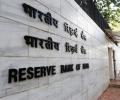
The central bank's next monetary policy review is scheduled for April 5. It had kept the policy rate unchanged in its February meeting on fears of inflation.
Foreign institutional investors were the major sellers on the Indian bourses in the last six months, accounting for total outflows of Rs 62,000 crore (Rs 620 billion).

Portfolio returns, say analysts at Morgan Stanley, are more likely to be driven by bottom-up stock-picking rather than top-down macro forces.
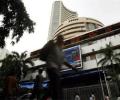
Broking firm Jefferies says Indian financial system is now flooded with the kind of liquidity witnessed in 2005-07 and 2009-10
Notwithstanding the protectionism and other hindrances, the current mood of optimism about the Indian business process outsourcing sector's growth prospects seems justified, according to the London-based magazine The Economist.
'FDI is not a big issue because Indians are in now a position to raise big money.'

It is nearly after 13 years that a foreign brokerage has resumed holistic coverage on stocks of public sector banks (PSBs). To that extent, Morgan Stanley's report dated March 3, where the analysts have listed their order of preference for PSB stocks, is an indication that the state-owned banks may once again be attracting some interest, thanks to three back-to-back quarters of good results in FY21 so far. "State-owned banks' balance sheets have improved, and bad loans formation should moderate going forward," the analysts note and this is the key reason for them to relook at their stance on PSBs. While State Bank of India (SBI) remains their preferred pick, stocks of Bank of Baroda (BOB) and Punjab National Bank (PNB) have been upgraded from 'underweight' to 'equal-weight'. The brokerage maintains its underweight recommendation on Bank of India and Canara Bank.

Chief executive officers (CEOs) across sectors have expressed intentions to expand capacities, expecting the government's target to invest a record Rs 11.11 trillion on infrastructure development will act as a catalyst for a jump in consumer demand. "With the government planning a capex of Rs 11.11 trillion, private sector investment will come in a big way. Companies will be preparing for it right from today," H M Bangur, chairman of Shree Cement, told Business Standard. For the past few years, the investment scene in India has been dominated by government capital expenditures; private investments in the manufacturing sector have remained muted.

This is despite the fact that total FDI into India has fallen by 22 per cent from $58 billion in FY22 to $46 billion in FY23, according to the Reserve Bank of India.
.jpg)
The newly-appointed Governor Raghuram Rajan said on Wednesday Reserve Bank of India will offer a window to banks to swap the fresh FCNR-B dollar funds, mobilised for a minimum tenor of three years and over, at a fixed rate of 3.5 per cent per annum. According to Bank of America Merrill Lynch, "the move should fetch $8-10 billion", adding that the move would help in shifting rupee risks away from NRIs at a time of extreme volatility.
Everyone is worried about inflation making their money worth less or even worthless.

India has the highest proportion of CODs at 60% of total orders, compared to 50% in China, 28% in Indonesia, and 24% in Brazil
It's going to be India's most exclusive super-rich club, with membership restricted to those with a minimum investible surplus of $1 billion. Called Private Investment Club, it will launch its services from September 16.Members of the club will get preferred access to deals that Morgan Stanley will be doing. They will also get to co-invest with Morgan Stanley in deals as well as participate as limited partners in its global funds.

India offers policy stability, transparency and consultative process of governance to incubate investment, Finance Minister Nirmala Sitharaman said on Thursday as she invited investments in prospecting energy resources in the country. Stressing that there is a need for investments in coal, she said, "We need greater investments also to help in gasification of coal. I invite all of you to energetically participate in the (sixth round of commercial mines) auction processes which have been launched today and keep your options also further extended for greater extraction of minerals in India." During this 'Amrit Kaal', India needs all the basic minerals as the country is in the process of rapid growth, she added.

What matters is the culture and the atmosphere of the workplace, and whether employees get treated fairly. 'It is also important for the employee to feel s/he is part of a winning team,' Credit Suisse's Mickey Doshi tells Niraj Bhatt.

India accounted for a meagre 5.1 per cent of merger and acquisition (M&A) deals among emerging countries in the first nine months this year, the lowest in the BRIC (Brazil, Russia, India and China) nations.

He says he has tremendous expectations from RIL's broadband digital services business.
The ugly underbelly of the policies of economic liberalisation followed over the last two decades has been crony capitalism at its worst.

Analysts are bullish on consumption and investment themes.

Indian markets started 2012 on a positive note. Ridham Desai, managing director and strategist and head of India equity research, Morgan Stanley, says, he expects a 15 per cent upside in the Sensex this year.
The Securities and Exchange Board of India has issued "certain observations" and "sought clarifications" on draft prospectus for Tata Consultancy Services Ltd's initial public offering.
With growth rates slowing and global concerns not abating, the Street is increasingly becoming worried about rising stress levels for corporate India.

Also, the combination of a new entrant and new technology is not necessarily good.

Citi Bank on Wednesday joined the list of foreign banks that have exited the retail banking business in India as the US-based banking giant announced selling its consumer banking portfolio to Axis Bank for an estimated Rs 12,325 crore. Global banking majors such as ANZ Grindlays, RBS, Commonwealth Bank of Australia have scaled down their operations in India. In a mega-deal announcement on Wednesday, Axis Bank and Citibank said their boards have approved acquisition of Citibank's consumer businesses in India by Axis Bank.

Jayesh Gandhi, executive director, Morgan Stanley Investment Management in an interview with Business Standard, says Indian equities continue to remain a long-term bull story based on the growth prospect for the country and, hence, in a way cannot be ignored by global investors.

The report further noted that inflation is expected to fall to 4.5 per cent by quarter ended March 2017.

The biggest losers on the National Stock Exchange's benchmark Nifty 50 index are stocks that have seen the highest turnover over the past 12 months, according a report by Morgan Stanley.

Reliance Industries Ltd, India's most valuable company, is back on a growth path after six months of challenges as it posted better than expected earnings in the December quarter, brokerages said.
Market participants were cautious ahead of WPI data release tomorrow.

India's prices are rising faster than many of its emerging market peers. The country's inflation print for May at 4.25 per cent is a marked reduction from the levels seen in May 2022 (7.04 per cent). However, even though the inflation rate remains within the Reserve Bank of India's medium-term target of 4 per cent, with a 2 per cent margin on either side, it continues to be higher than China, Russia, and Brazil.
The Indian equity market has once again demonstrated its high beta characteristic in bear markets. The fundamental underpinning to this high beta status in bear markets is India's dependence on global financial markets to fund its macro -- more than three-fourths of the flows into India come from portfolio sources (which are linked to global financial market outcomes) -- quite the opposite of the emerging markets average.

The markets ended lower amid a volatile trading session on Monday after profit taking was seen across the board because of growth concerns.

The first issue is inflation, which has been widely discussed. The government is now rightly working on reversing fiscal and monetary stimulus to manage the inflation pressure.

India Today's annual list ranks the top 100 colleges in the country.

The stock of the country's largest passenger vehicle maker, Maruti Suzuki India (MSIL), has been hitting successive all-time highs over the past three trading sessions. The rally in the scrip has helped it notch over a 21 per cent gain since the start of February, outperforming the National Stock Exchange Nifty Auto Index. The gains for the leader of small passenger cars have been more recent, as the company still trails the Nifty Auto over one- and two-year periods.
Citibank on Wednesday joined the list of foreign banks that have exited retail banking business in India. Mumbai-based Axis Bank completed acquisition of Citigroup's consumer business for Rs 11,603 crore. Under the deal, Axis acquired consumer banking businesses of Citibank India, which includes credit cards, retail banking, wealth management and consumer loans.
The high-profile bidding war for control of Hutch-Essar could intensify with reports in the British media suggesting that Indian partner Ruias have received funding pledges worth up to $25 billion to buy out foreign stakeholder Hutchison Telecom.
